"Unvaried Variation" -Originally from Black-and-Red Verses" (1965-1972)
although the thunders have rolled on and the lightning bolts have fizzled out the evening still can make a child of this old man with autumn hair and gout
standing int he same old hollow tree where I was at the age of five when I spent a long night crying and shouting songs to stay alive
*
"Should Be Abolished" -Originally from Poems about Poetry (1974-1977)
not only punctuation marks but capital letters basking in class distinction should be abolished words should be stripped naked just like those deported
What was the father really but big goof balls popping and drain covers and long rails of fat 'cause cause to order fresh appropriation seemed good back then when we thought about patterns.
It takes a long strand of thought to explode circuits I said watching circuits darken, power outage from east bank to west, drawing as in lips to cold pool of coldest month in transition you
sitting there sipping discussing structures' lacked evidence. But it was fine, it was like having falling back to worms since that's everything all the time anyway and this new shirt isn't helping your look.
Let's liken it to something since memory, evidence of it happening holds more value than an actual experience that we don't even need you for that we have removed you from
The work I sent you most recently was indeed rough drafts and other bits and pieces I had floating around. I sent various friends small collections of my drafts because the drafts weren’t doing anything here with me and I figured it would be more beneficial to confuse/mystify/startle various recipients by doing something different. I guess it worked with the inquisitive you. The problem with sending out material like this, unmarked and appearing haphazard, is that it looks half-ass, and while the amount of effort that goes into stuffing an envelope filled with messy, crazy pieces of paper is not necessarily that great, I hoped you find it pleasurable anyway. I assure you the next creative work I mail to you will be up to par in its neat composure.
But how is Rhode Island? Is it still a sink hole? A stink pit? A nether realm? A beautiful coastal habitat? I rarely think about it these days, though I take note of it whenever it comes up in conversation with randoms. I think about you sometimes and wish I could see you as it’s been so long. Do you miss your friends from school in strange ways? To me Roger Williams is like a ghost town, like a refinery of spirits, fading but still out there, somewhere. A mist, if you like King references. Is it tragic? I do not know. Some days I contemplate the integrity of growing old and I get really sad. Following college life and that post-college-confused-glow, people really turn into those caricatures that show up on the big screen. Only now am I freaking out about it, breaking down about it. Strangely enough it wasn’t the first high school friend I noticed got married, or the first friend I noticed had a child, a baby, an offspring, an heir; rather, it’s the work and the relationships that are chaotic all around me that freak me out. People dating people they hardly know and have to start to get to know. It is a commodity of survival; and it seems false. And oddly enough, I think about the primal qualities in relationships from high school and early college, where people weren’t pretentious and prestigious and were just wild, sexual beings coming together for some raw energy appeal.
The obvious answer is in recreation. People can recreate their youthful heydays if they want to. But this recreation is the struggle everyone faces, and it’s a struggle. And it’s faced. This is error to me; this is denial and unwillingness. We do not know how to push forward but we do not care. Because time is always running out for the adult. I am waiting until that time where I become one of the millions who claim adult years go by so fast. I am scared sometimes. Some people take chemicals to recreate their childhood emotions and intelligences. The LSD-baby-vision-reformation-practice is what I mean. You have heard of this, I am sure? To be able to think on the same imaginative level as the young child who is still learning via full, wholesome emersion. I still engage in tripping on hallucinogens like acid but mostly I get really happy—really, really happy (because non-refined, utterly true blue happiness is early childhood for me), but then I get really sad, really critical, and subject to the great failures of my life thus far. For me failure is the most apposite affectation. It is a hump that can’t be retrieved; attempting to leap over such a hill becomes a new hill in its attempt. Do you ever think about storms? There’s an author who wrote about a storm. It was large and always on the horizon. It was terrifying. When it reaches you it sucks out your life, sucks it up, and gives you a new life. It’s a life that can’t be built or destroyed. We can only bear witness.
Storms are cruel mothers. Lightning; thunder; beauty; intensity. But it is just like that uncropped childhood block building. Storms are completely immense experiences. Unexplainable, no matter how hard we try. I think the greatest weapon in the world would be a storm that could be controlled; or a storm that didn’t end. Is this why weathers of disaster always come up in literature, film, and other modes of “entertainment”? We love death. Thanatos. We love fear. Phobias. Our anxiety keeps us on the edge of our seats. Then we dream of loves. People to be there with us; people who we want to understand us better than we can understand ourselves. This is a painful request for the self as it requires the suffering of admission. Admittance is never free: boundaries will pop up like bacteria. Small things that eat away at the whole. Do you ever dream of the blindness of a newborn? Sometimes I wish I was forever in that womb-ejected state. Fresh, warm, wet, screaming, the light everywhere. That first light. That infinite light. The light that comes before we learn to use our memory, before we learn to use our memory so we can start forgetting how to memorize, in order to protect ourselves, because all we really want is that first light.
Greg
***
11-09-07
I sat and watched you, your ears were behind earphones, spectacles spat to face, the droning of so many songs.
Evil brightening before days, yellow lights electric skyline porous skyline put your boots on take them off scrape off the mud
it must come off come off, it must.
little bird flying with little wings sighing with little children as champs behind billions of boxes, behind all of those eyes ripple trickling water trickling water, torrential torpor try this try that do something do black under spotlight do shirt of gold under sparkling white teeth
tweet tweet tweet tweet
billboard burnt fuchsia billboard burnt
the callers at the call centers, I can't imagine them being very happy, I cannot imagine them trying very hard--this is what I do, do not try hard, the clown mask is hilarious, as it is: many, many people cornered by jaguar grins and currency became teeth under old spotlit glamor glance billboard drums too old!
8:43pmJeff: i hate people who greet everything new with wide-eye'd terror like Tracy on the biggest loser
8:44pmMaria: better to squint?
8:44pmJeff: no, better to concentrate on blowing yourself up and hoping to feel wonder, surprise even though mass-culture has made that impossible we can find every stimuli possible on television, or On Demand or the internet we only seek these new stimuli because we saw them on television, on Demand, or online and others have described them as ideal it's all an effort to be part of a crowd and the crowd is massive it's every person in the world except for luddites in south america and the dying in africa it's not even a shared experience since there is no sharing but it's the furthest thing from unique since we now have an "ideal" set of life experiences and our lives are spent grinding towards the resources necessary to accomplishing them and if we don't, we are failures
Vomit in the foyer and a reminder: burger patties. Drone of a television: behind courtyard walls the suicide girl clutches her remote; these memories are wireless, and streaming, a real tourniquet sans buttons. Back to creeping fingers to ward off parched throat. Plunge into columned skin. We spoke of flayed facial flesh, the blood drops pittering down the cheek. My mouth is dry in daily thought, and while the bands sucked tonight one of them didn’t. I think I’ll send you a message later; carpet bombs. Bombs for the babes, for the lightning beings and crass espionage failings. Wandering around: wondering aloud—blackout, bonanza’d sam-itches in a foreign city. We are plastered forever waiting for bombs forever and still, some news clips preloaded. We can ride the train to work reading them and thinking of not calling anyone else including your sisters.
More than a Feeling: How the Red Jacket of City Year Adopts and Transfuses its Wearer and Viewer with the City Year Culture, and how Gregory Bem is Deserving of the Jacket, and how he must confess that the City Year Jacket is for Him
Every culture has different symbols that represent the values, procedures, and operations from each branch of the culture. Some cultures are spiritual, some are governmental; some are bureaucratic, while some lack overarching structure. As a long-running, well-established non-profit organization located in a diverse collection of urban hubs throughout the United States of America, City Year has developed a culture of its own, and with its culture comes a set visual symbols that are prophetic, empowering, and noticeable by both members of City Year and members of the society in which City Year finds its home. Some of these cultural symbols, like the City Year logo, reflect the history of City Year’s formation, the founding principles, values and ideals of City Year’s existence, the year-long life of City Year’s presence in the cities, and the diverse group of people involved under City Year, who are celebrating through participation. For example, the font of the logo is derived from the Civilian Conservation Corps, who as a precursor to City Year led the service movement in the United States of America during the 1930s; the logo has circles that “symbolize community and equality” (Idealist Handbook, pg. 25) and represent the “power circle” concept, which is a way for City Year Corps Members do communicate on an inclusive basis. There are many pieces of this powerful and effective logo, which all perform their individual, visual parts to comprise a “whole” that can be received by City Year and outside members of greater city communities with an understanding of all associative benefits that City Year provides for the society. Like the logo, another manifestation of the City Year experience is through uniform, which each and every member is required to where while they serve under City Year[1]; this uniform is as complex as its logo, if not more so. There are many parts of the uniform: the boots that are worn on each City Year Corps Member’s working feet, provided by the company Timberland, which promotes an awareness between non-profit work and corporate sponsorship; the khaki pants, which are to be pressed and starched for professionalism, and the variety of City Year shirts, which also show sponsors, the logo, and color coordination amongst the Corps Members. But there is nothing greater in all of the City Year uniform, and the entirety of the culture for that matter, than City Year’s red jacket. The red jacket is a masterful symbol. It is worn by each member of the Corps, as well as stakeholders of City Year, and holds in each of its fibers the strokes of energy, effort, and service that City Year has given, is giving, and has the potential to give. The red jacket has many layers of meaning that make it up as an effective symbol, as a representation of the City Year culture. Red is love, courage, sacrifice, and power. It has many meanings across many cultures, but most importantly it is like the inner red circle of the City Year logo, which is designed to portray energy, idealism, and warmth. The red jacket is the primary component of an attire that can truly and utterly be identified from a distance, with the red jacket’s bright hues and strong reflective qualities. The red jacket is a jacket, which means the red jacket covers the entire upper torso of the working, servicing body that wears the red jacket. But as a symbol the red jacket has social significance too: the red jacket is a symbol of unity. With every City Year member wearing the red jacket, the red jacket demonstrates cooperation, coordination, and community; the red jacket represents a joint effort to bring forward the ideas of the organization; the red jacket in unison with each and every other red jacket is a powerful sight indeed!It brings that ideals of City Year—spirit, discipline, purpose, pride, and power—into fruition. It is striking but balanced; attractive but sturdy and functional. The red jacket is an extension of our humanity and our humanistic, functional prowess that can be attributed allegorically, metaphysically to our body parts that warm, bake if you will, under the jacket’s gentle caress—from the weight on our soldiers to the beating heart of love in our chests to the directional control of our necks—the red jacket serves us better so that we may serve the communities we work in better and serves the communities we work in as a presence that may help us serve better. The red jacket is like the apple, which lingers on the end of the apple tree’s twig in September, waiting to be plucked, but always, always, always a smaller unit in a larger picture, a picture of other apples on their respective twigs, stems atwitter, the branch aging healthily, the sky blue in the distance, the human being and animals coming to watch the ripened fruit and pick it up knowing the fruit’s purposes to flavor the mouth and fill the belly. The red jacket is like this.[2]
So you may be wondering why I want to wear the red jacket. You may be, in your curiosity, intrigued as to how I relate to such a symbol. Well, the potential is quite high that I may get to don the red jacket in the near future as a reward for my concentrated work-shopping and the vast learning procedures I have engaged in and processed since joining City Year. The honor is undeniable. To wear the City Year jacket means to be part of something greater than the self; the red jacket is indeed a token of community, togetherness, and Values[3], but to be more specific it is a recognizable cause that will allow me to better identify myself with those I have the pleasure of serving with, no matter how much along the surface such identity is through uniform relationships, and no matter how far deep the symbolism stretches, like a rabbit hole going on and on, with surprises waiting around every bend, but the concept of the rabbit hole being unbroken, being true as a concept, as an idea, to whatever depths may be discovered. And on the inverse of the equation, the jacket becomes important because people can lean on me for support, see me as someone in their shoes, or moccasins that can demonstrate we all come from our own lives, moving along wonderfully at our own pace, as we are individuals, and we are moving in directions that others may gain from. When I imagine myself putting on the red jacket zipping up for the first time, I imagine myself becoming a new being, a being had energies necessary to change the world, but needed the capstone to seal the deal; the red jacket completes the multi-component uniform, and thus completes the symbolism of a culture that can be installed within the neighborhoods, streets, blocks, and people we are working with. And when I see a facet of the society recognize me for who I am from a distance or from up close, for the first time or the thousandth, I will know that I am receiving such joy for the greater group as a whole as well, which will only further thrust me into the most important and complex situations that an educator, a service-leader, may face. For the jacket will turn its wearer into a leader, into a believer of the self. For what is a king or queen without a crown? For what is a policeman without his sky-blue top, or an astronaut without his helmet? Like City Year, these people all have important, symbolic finales to their uniforms that will complete them and allow them, and everyone else, to be aware of their role, their presence within the world. I look forward to the moment when I will put on the red jacket and will feel the completion begin to take place and assure me that, even if the service year is going in a chaotic direction, a direction I cannot trust, I will be able to have faith in the power of the red jacket.
[1] While the uniform is required to be worn during all City Year hours under City Year’s policies, wearing the uniform is seen as an honorable, respectable privilege that only serves to supplement the greater good that City Year is performing. Among City Year’s goals during the Basic Training Academy portion of a Corps Member’s service year is to ensure a well-rounded, holistic view of the uniform and its many cultural functions.
[2] Please, though, dear reader, understand that this metaphoric escapade is not to demean or reduce the value of the red jacket in the City Year organization; it is a poetic statement serving to better bring the values of the red jacket into view, as we humans can perhaps better relate to an idealistic visage than to the abstract socio-cultural banter of a college-educated intellectual.
[3] A set of overarching Values (capital “v” intended) which includes the following mantra-chant: spirit, discipline, purpose, and pride—all qualities of a program that will lead each member and those that each member interacts with to future success and expansive opportunity. To have “spirit” within City Year means that one is in sync with the energy that can be harnessed to propel the individual into a period of service; to have discipline means that one is able to put aside obstacles and remain true to one’s training and one’s directional standards; to have “purpose” means that one is aware of the problems facing the society—including but not limited to social equality/inequality, the issue of rights between the oppressed and the privileged; and the uneducated masses that have been left in the darkness of ignorance and left without any knowledge of how to get out of the darkness; and to have “pride,” which at its most rudimentary and primal form means a liking and sense of ownership over one’s actions, or one’s group actions (group being the greater City Year group, the city that one is serving in, or the smaller group of one’s school).
After an anxiety attack during the worst week in recent memory We're going on a bear hunt the widower, with child an amber alert we noted from the highway we imagined our seat-belts off
the retarded girl screaming laughs, arms from blue wheelchair "I haven't seen them thinking about you..."
Home is senseless (due to caring being impossible/despair mounting) the courteous panic of a collision course
the heart assimilates the bones as you ring blood from your work-socks
The post-modern had a locker near the institute that was also prohibitive based solely on it’s location, the demographs (-gods) around it, the sociologists that would visit with their head lamps and their ideas that dragged down that shook out the skeleton babies from strange tree-bellies.
I want you to hit me in the mouth and in my face at the same time but using the same physics you remember from birth.
We sealed the end of the world in a bottle and then mass produced it after securing a grant from the bank we started with our profits from the election fund-raiser dinners we hosted in the green-zone of a proxy war we fought with ourselves
And black was invented in Kenya and our waste disposal is two blades and a toilet and the girls without cups have knives for a reason and your cat is named Guy Debord and the best babe is gone and dust is more white than dead skin and Abraham Lincolns anyways which is what we ALL are!
Brief transposition of ideographic logic with linear English grammatical form and Kenneth Rexroth:
One hundred poems from the Chinese From the Chinese, one hundred poems The Chinese from one hundred poems… One hundred Chinese, the poems from From one hundred poems…THE CHINESE!!!
When he died, the coroner found three hundred species of insects thriving in Karl Marx’s beard in a just, post-capital, collectivist society wherein the workers controlled the means of production, from each according to his own ability, to each according to his need, which was sucking blood out of Karl Marx’s neck flesh and eventually up to his hair near the end of his life as dialectic reveries ran bonish and the money ran in.
You are roughly as physical as Andre Agassi (and roughly as gorilla).
I heard you found honey in your house, the same house you bought from the boss in the second world of donkey kong 2 and the madness you feel at not being able to remember any of the names of any of the characters other than the eponymous in fact you only really remember the varieties of alligators (Donkey Kong’s natural predators) and the old father-time version of Donkey Kong who spins the phonogram machine at the end when you die or that you see when you switch that fat, semi-sticky purple bar upwards on your SNES (afterthought: if you can bounce THAT high on tires then you need some deflation/an intervention/reinvention as American Gladiator),
Caution: if you paint your walls red, blue, and green you will always feel like a test-pattern-souled neo-Hegelian nothingmaster playing fantasty football in rare dreams.
Was waitin' in my bed for the bugs to stop bitin' before my time to put in to the clock would start but I had only been watchful for five minutes when the alarm buzzed with alcoholism and my knees tightened through charlie horse spasm.
why don't you blend titles more often, thought. why don't you do remixes, remakes, peace plans.
I tasted blood on my tongue before falling back down and closing my eyes to wake up in the dream of the alarm clock once more, the fiction of it all more extraordinary than de-pee-viewed once more.
Take your arms from around your back and shout equality before making way down the wooden steps. I was in my apartment for five minutes after a bomb exploded outside in the blacktop, outstretched hand.
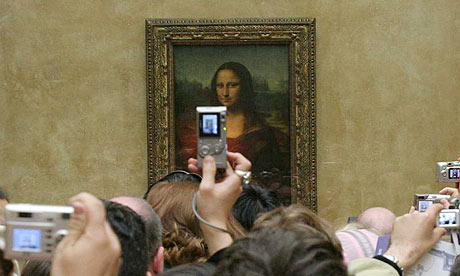
Several days later Murray asked me about a tourist attraction known as the most photographed barn in America. We drove 22 miles into the country around Farmington. There were meadows and apple orchards. White fences trailed through the rolling fields. Soon the signs started appearing. THE MOST PHOTOGRAPHED BARN IN AMERICA. We counted five signs before we reached the site. There were 40 cars and a tour bus in the makeshift lot. We walked along a cowpath to the slightly elevated spot set aside for viewing and photographing. All the people had cameras; some had tripods, telephoto lenses, filter kits. A man in a booth sold postcards and slides -- pictures of the barn taken from the elevated spot. We stood near a grove of trees and watched the photographers. Murray maintained a prolonged silence, occasionally scrawling some notes in a little book.
"No one sees the barn," he said finally.
A long silence followed.
"Once you've seen the signs about the barn, it becomes impossible to see the barn."
He fell silent once more. People with cameras left the elevated site, replaced by others.
We're not here to capture an image, we're here to maintain one. Every photograph reinforces the aura. Can you feel it, Jack? An accumulation of nameless energies."
There was an extended silence. The man in the booth sold postcards and slides.
"Being here is a kind of spiritual surrender. We see only what the others see. The thousands who were here in the past, those who will come in the future. We've agreed to be part of a collective perception. It literally colors our vision. A religious experience in a way, like all tourism."
Another silence ensued.
"They are taking pictures of taking pictures," he said.
He did not speak for a while. We listened to the incessant clicking of shutter release buttons, the rustling crank of levers that advanced the film.
"What was the barn like before it was photographed?" he said. "What did it look like, how was it different from the other barns, how was it similar to other barns? We can't answer these questions because we've read the signs, seen the people snapping the pictures. We can't get outside the aura. We're part of the aura. We're here. We're now."